Parking Garage Cold Joint Testing
April 2020
San Jose, CA
Overview

Credit- Watry Design, Inc.; Photo by Jason O'Rear
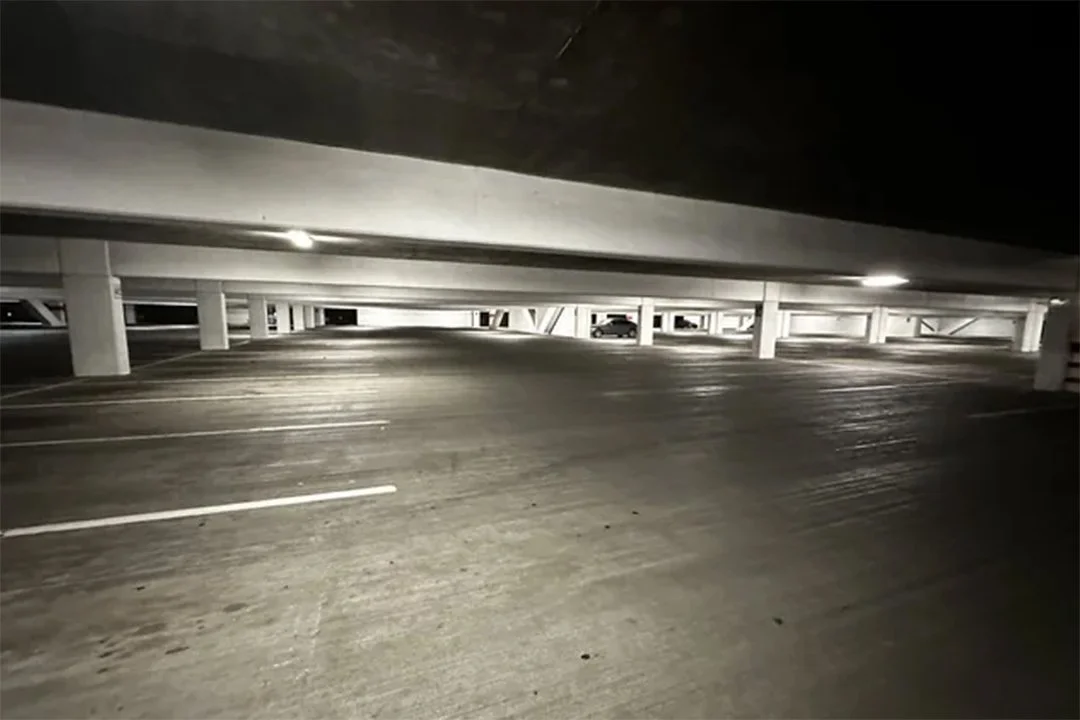
Concrete Science, Inc. (CSI) conducted an investigation of cold joints found in the concrete beams and slab at a parking garage in San Jose. These joints, formed due to delays in concrete delivery and placement, raised concerns about the structural bond and potential flaws. CSI performed a thorough assessment through a combination of field inspections, nondestructive testing, coring, and laboratory analysis to evaluate the condition of the concrete at these joint locations.
The investigation, which took place in March 2020, focused on seven concrete beams and two slab areas suspected of having cold joints. The goal was to assess whether these construction joints compromised structural performance.
SCOPE OF WORK
-
Evaluated internal concrete consistency using sensors on 6-inch grid intervals. Travel times longer than 96 microseconds flagged potential flaws such as honeycomb or voids.
-
Used stress wave reflection to detect internal defects and estimate slab thickness at 20 points in two slab areas.
-
Extracted 12 concrete cores (10 from beams, 2 from slabs) to evaluate material condition.
Six cores were tested per ASTM C 496 to assess bond strength at the cold joints.
-
Seven cores were examined to evaluate bond quality and identify microstructural features affecting performance.
KEY FINDINGS
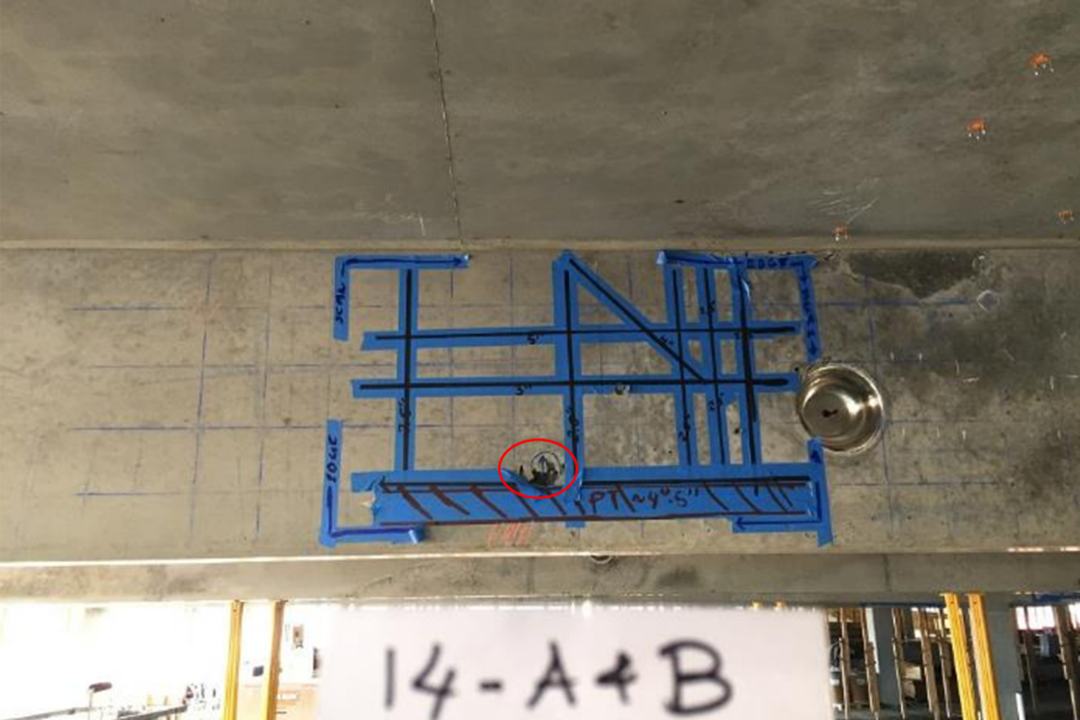
1. Pulse Velocity Testing (Beams):
Most beam areas showed good concrete consolidation. However, some locations beneath the post-tensioning cables produced unstable readings, indicating potential localized flaws.
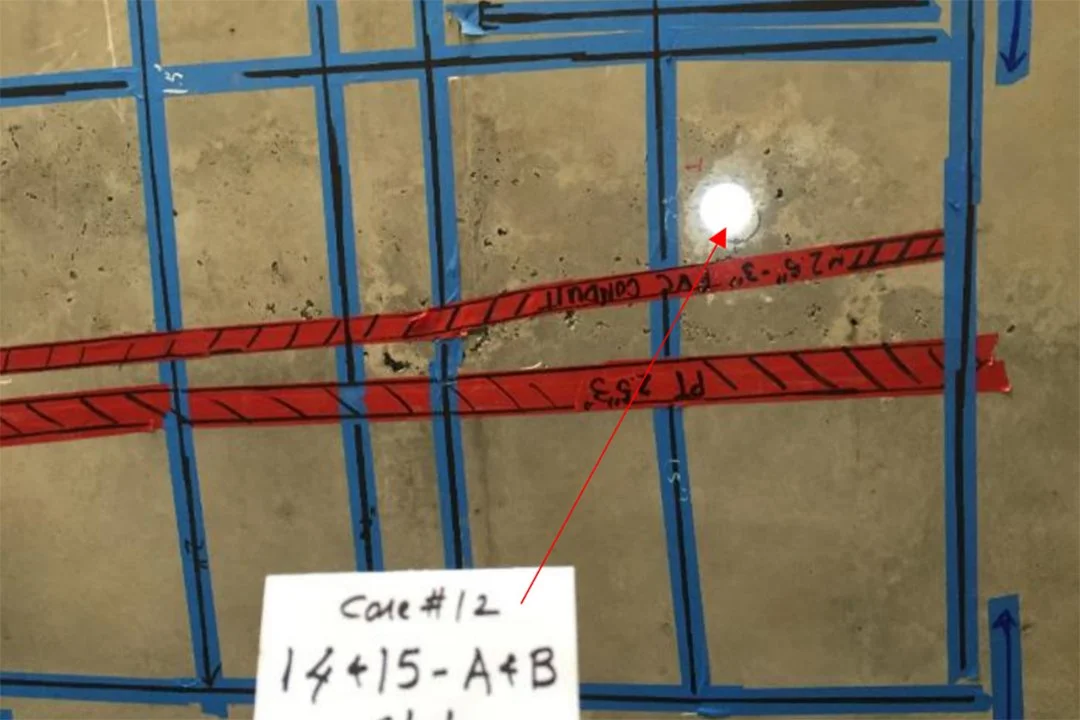
2. Impact Echo Testing (Slabs):
No signs of internal honeycombing or delamination were found in the two slab sections. Slab thickness ranged between 4.6" and 5.2".
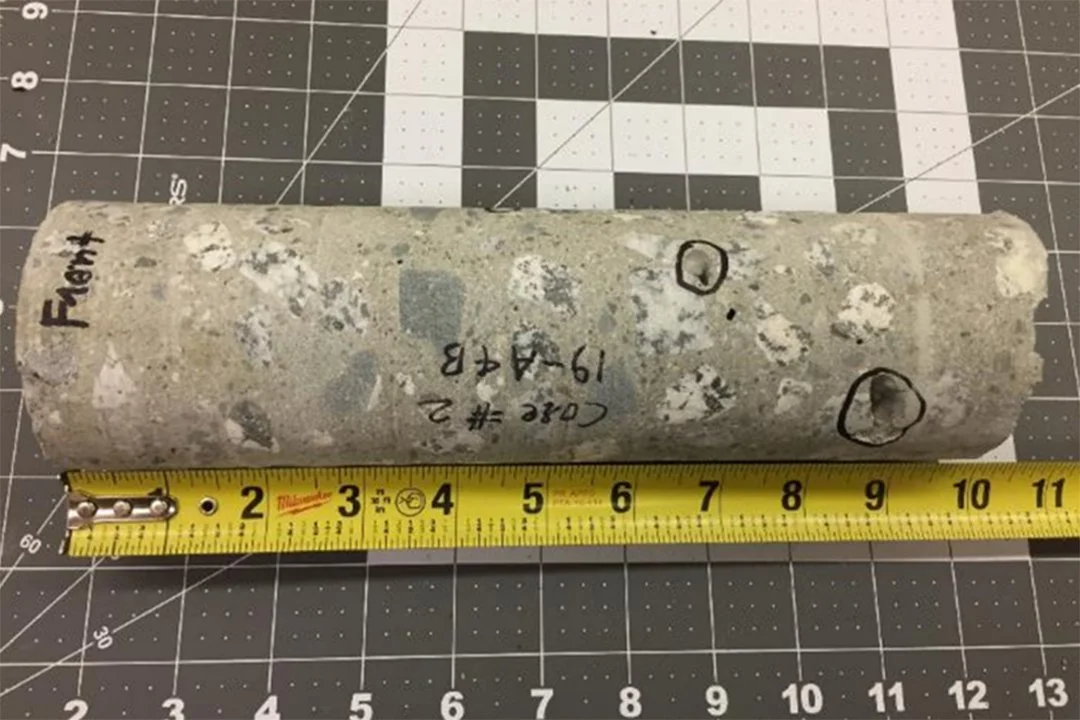
3. Core Observations:
Minor, non-continuous honeycombs (1/8" to 1/2" in size) were observed in several beam cores. Core #9 showed a delamination plane 2" from the beam face. Slab cores showed either isolated honeycombs or minor surface imperfections.
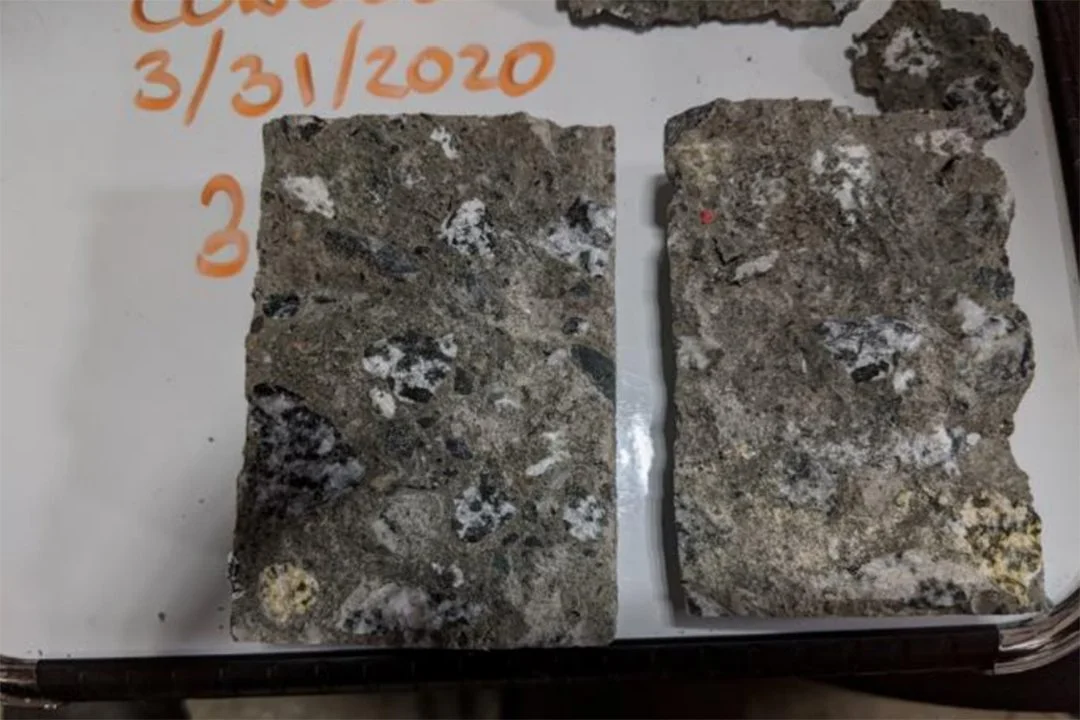
4. Split Tensile Strength:
Ranged from 655 to 790 psi, averaging 740 psi. The high proportion of fractured coarse aggregate indicated strong cement paste bond—often stronger than the aggregate itself.
5. Microscopic Analysis:
Core #3 showed fairly good bonding at the cold joint, with minor soft paste zones (Moh's hardness ~2). Core #11 revealed a well-bonded joint at 3.75" depth. Microcracks and bleedwater channels were noted but did not appear to impact overall bond.
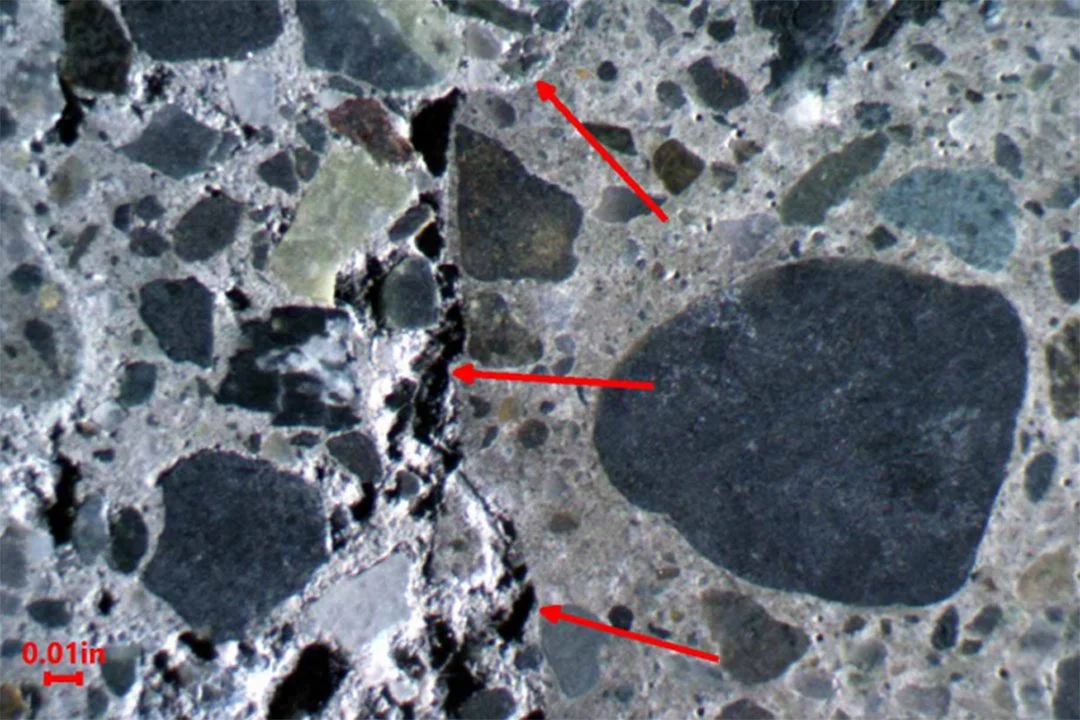
Core #3 shows the interface of the cold joint (red arrows).
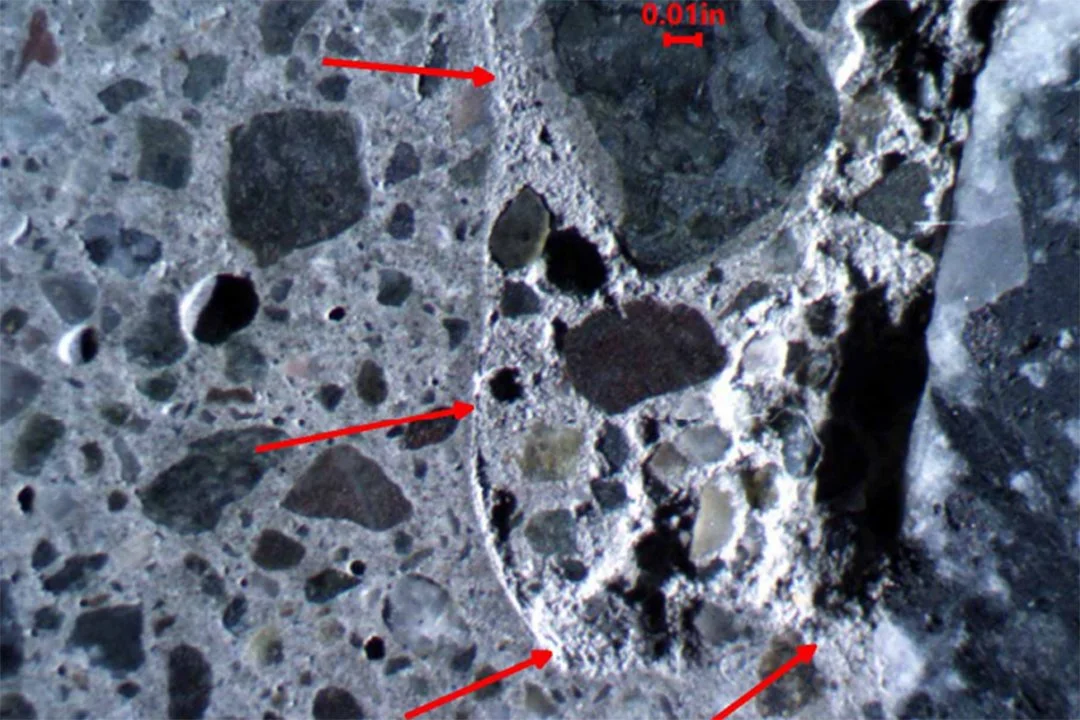
Paste near cold joint is relatively soft. Magnification 10x
RECOMMENDATIONS & SOLUTIONS
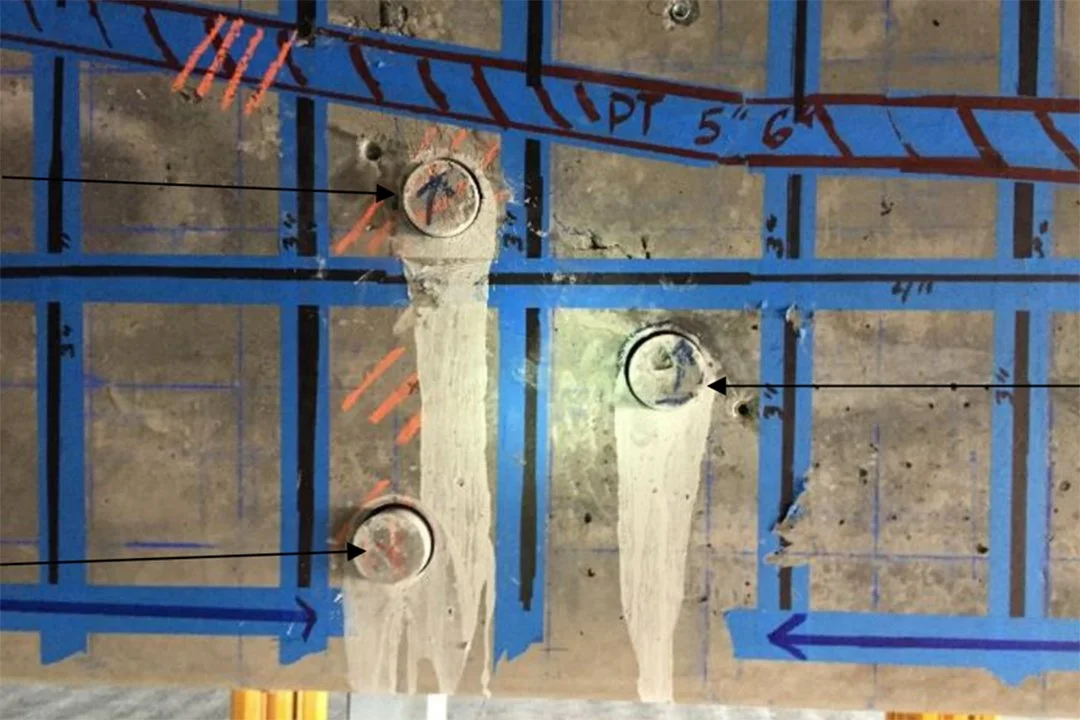
CSI found that the observed honeycombs were minor and non-interconnected, likely caused by inadequate vibration during placement. Based on the data, the cold joints did not show signs of widespread defects, and the bond between pours was good.
THE OUTCOME
The high tensile strength and consistent bonding observed in the examined cores support the conclusion that the cold joints did not significantly impact the performance of the concrete in the tested areas. CSI's findings provide confidence in the integrity of the structure, but the report should not be used for repair or structural decisions without CSI's direct involvement or a full structural analysis.