

Concrete Petrography | ASTM C856
A solid foundation starts with a solid understanding of it. The Petrography Lab at Concrete Science® Inc unlocks microscopic-level detail and science-backed assessments about foundations, supercharged with over a combined 50 years of civil engineering and geotechnical knowledge.
USACE & AASHTO Validated Testing Laboratory:


ASTM Standards
- ASTM C114 Chemical Analysis of Hydraulic Cement (LECO method)
- ASTM C174/C174M Thickness of Concrete Elements Using Drilled Cores
- ASTM C295 Petrographic Examination of Aggregates
- ASTM C457 Air-void System in Hardened Concrete
- ASTM C642 Density, Absorption, Voids
- ASTM C856 Petrographic Examination of Hardened Concrete
- ASTM C1152 Acid-soluble Chlorides
- ASTM C1218 Water-soluble Chlorides
- ASTM C1324 Examination and Analysis of Hardened Masonry Mortar
- ASTM C1542/C1542M Length of Concrete Cores
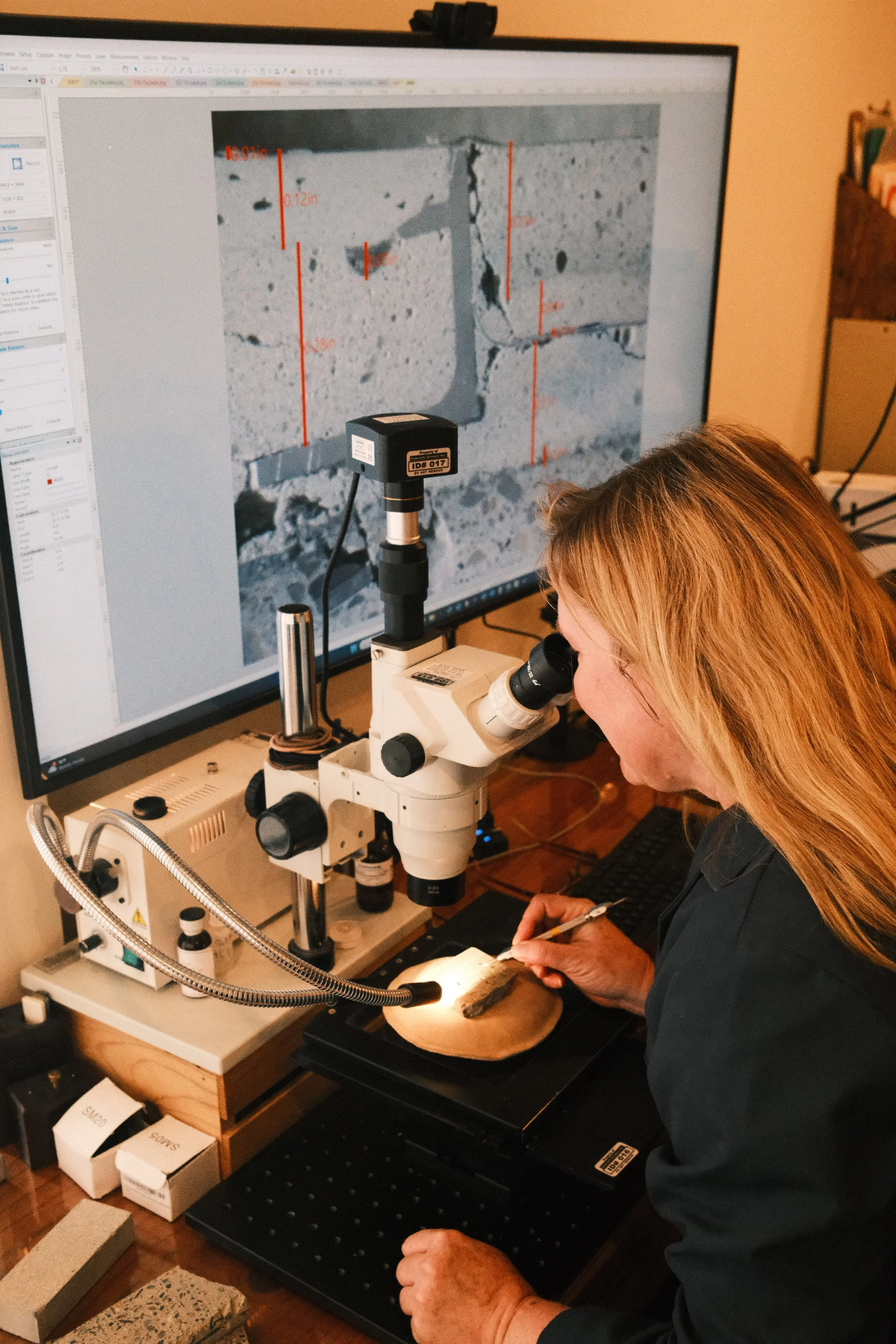
How it Works
Our Process
1. Get a Custom Quote
We analyze concrete, aggregate, stucco, and asphalt samples. Let us know the type of analysis you need, the number of samples, and your desired turnaround time. We'll provide a customized price tailored to your project's requirements.
2. Send Your Samples
Fill out the form on our ‘Contact’ page to help us understand your project and sample cores. After you submit, we’ll provide you with the quote, shipping address, and once accepted you will ship your samples.
3. Sample Collection & Preparation
We initiate the petrographic analysis process at our cutting-edge petrography lab. The sample is prepared and polished; thin sections are typically prepared to perform microscopic examination.
4. Microscopic Examination & Identification
The prepared sample undergoes microscopic examination to identify minerals and observe their arrangement. The physical properties of the components, such as color, shape, and size, facilitate their identification in this step.
5. Classification & Quantification
Once the components have been identified, they can be classified according to their type and quantified. For example, the analyst may determine the proportion of each type of aggregate in a concrete sample or the proportion of each mineral in a rock sample.
6. Analytics & Assessment
We combine our petrographic analysis with your project’s unique conditions to provide assessments of your sample materials’ quality, durability, and suitability for your needs. These assessments are rooted in the latest science and backed by our combined experience of over 50 years.
What you get
- Estimated water/cement ratio
- Photo-documented petrographic report
- Indicators of entrained vs. entrapped air
- Aggregate lithology and compatibility
- Observed distress mechanisms (ASR, freeze–thaw, sulfate)
- Carbonation depth indicators
- Microcracking and paste condition observations
WE HELP YOU UNDERSTAND THE PROBLEM AND THE NEXT STEPS.
Our petrography lab is staffed by experienced and award-winning engineers and geotechnical experts who have written the standards for petrographic, civil, and geotechnical analysis. Our analytical rigor is cemented by industry-leading ASTM standards and more.
Lab FAQ
-
To request a custom quote, please contact us directly with details about your project. Let us know the type of samples you have (concrete, aggregate, or stucco), the specific analyses you require, the number of samples, and your desired turnaround time. We'll review your information and provide a tailored quote that meets your needs.
-
We offer a comprehensive range of analyses, including petrographic examination, microscopic evaluation, mineral identification, and quantitative assessments of material composition. Our services are designed to evaluate the quality, durability, and suitability of your materials for specific applications.
-
Turnaround times can vary based on the complexity of the analysis and the number of samples. Once we understand your specific requirements, we can provide an estimated timeline. We strive to accommodate your schedule and offer expedited services if needed.
-
After we've discussed your project and you've accepted our custom quote, we'll provide you with detailed instructions for preparing and shipping your samples to our laboratory. We'll guide you through the necessary forms and any special handling procedures to ensure your samples arrive safely and securely.
-
Absolutely! Our team of experts doesn't just provide data; we offer comprehensive assessments that consider your project's unique features. We'll help you understand the implications of the analysis results on material quality, durability, and suitability, and offer insights to support your decision-making process.