Industrial Warehouse Cracks
Nov 2015
Santa Rosa, CA
Overview
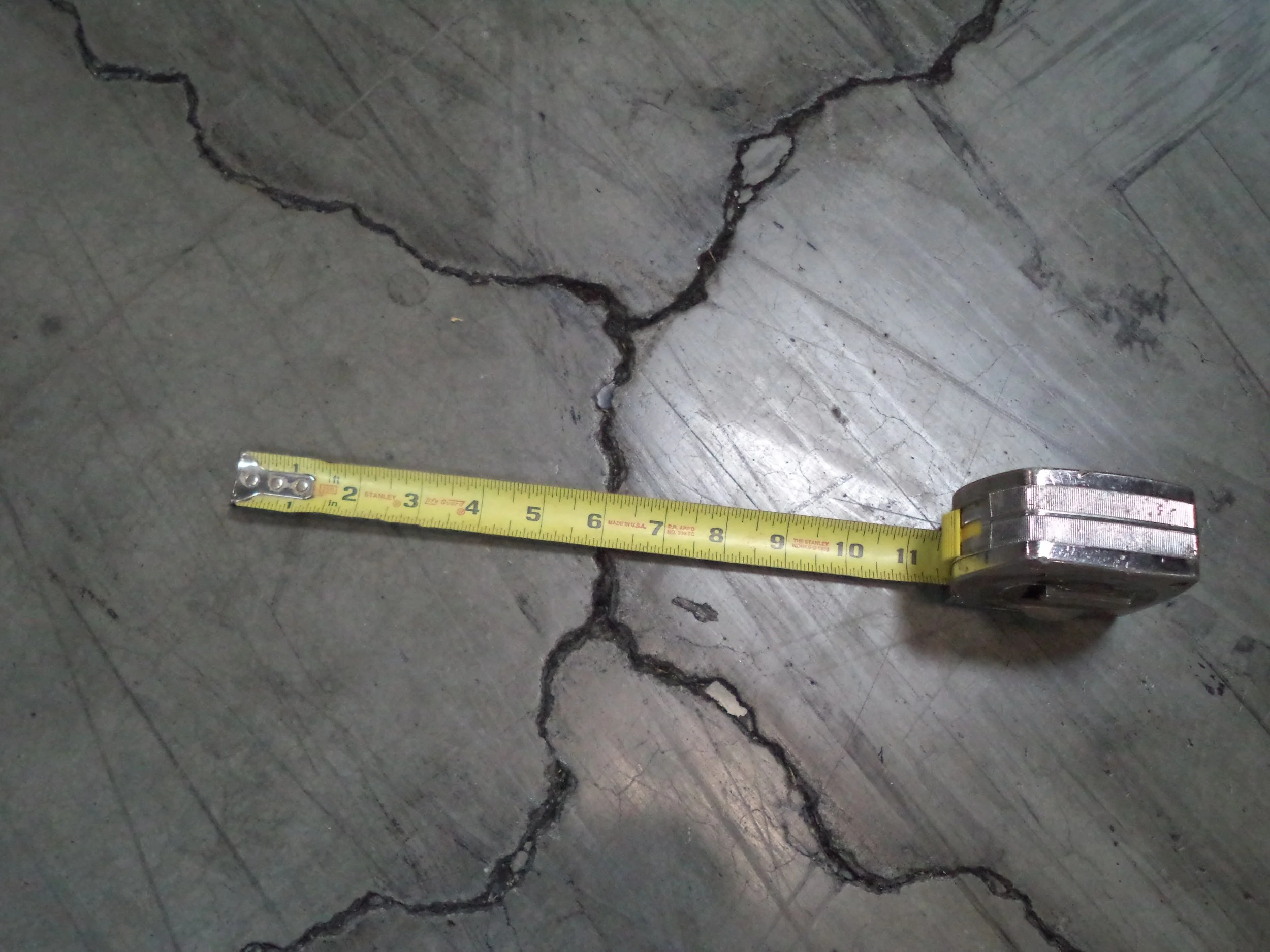
Industrial warehouse operations rely on flat, durable floor slabs that carry heavy forklift traffic, pallet jacks, and racking loads. The owner engaged Concrete Science to perform a focused condition assessment that would verify as-built conditions against the drawings and mix design, document cracking with scale, and determine whether targeted repairs could extend service life without removing the slab or shutting down the facility.
To ground the assessment, we blended a structured visual survey, selective coring, and a document check against design intent. The result was a clear picture of distress and confirmation that the slab was a good candidate for focused, in-place repairs completed while the facility stayed in service.
SCOPE OF WORK
-
Map crack traces on plan and record intersections and panel boundaries.
-
Survey panels and traffic aisles for slab distress, joint condition, and level changes.
Record scaled photos and measurements to support the crack map.
Index observations to a simple plan grid for targeted follow up and QA.
-
Compare issued drawings and mix design or specifications with field observations.
Note variances that affect reinforcement position, joint layout, or expected performance.
-
Extract select cores for visual checks only
Inspect core holes after removal and observe subgrade condition.
Verify slab thickness in sampled locations.
Confirm reinforcement location and approximate cover relative to slab depth.
KEY FINDINGS
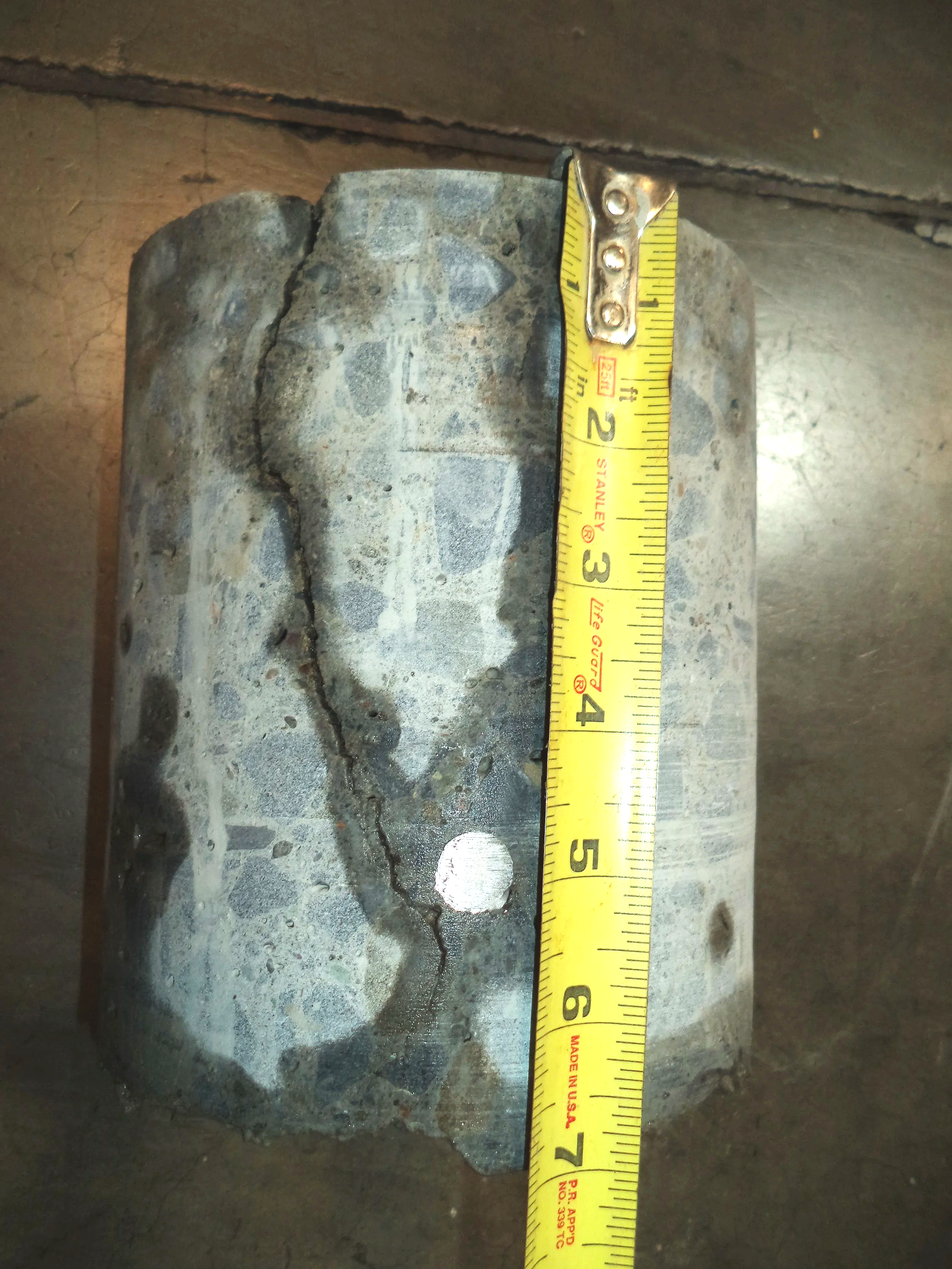
1. Reinforcement placement lower than planned
Select cores showed reinforcing steel closer to the slab bottom than indicated on the drawings reviewed, which allows wider shrinkage cracks to occur.
2. Concrete quality and thickness consistent with drawings in sampled locations
Visual review of the cores indicated sound paste with well-bonded aggregates and thickness consistent with the construction drawings.
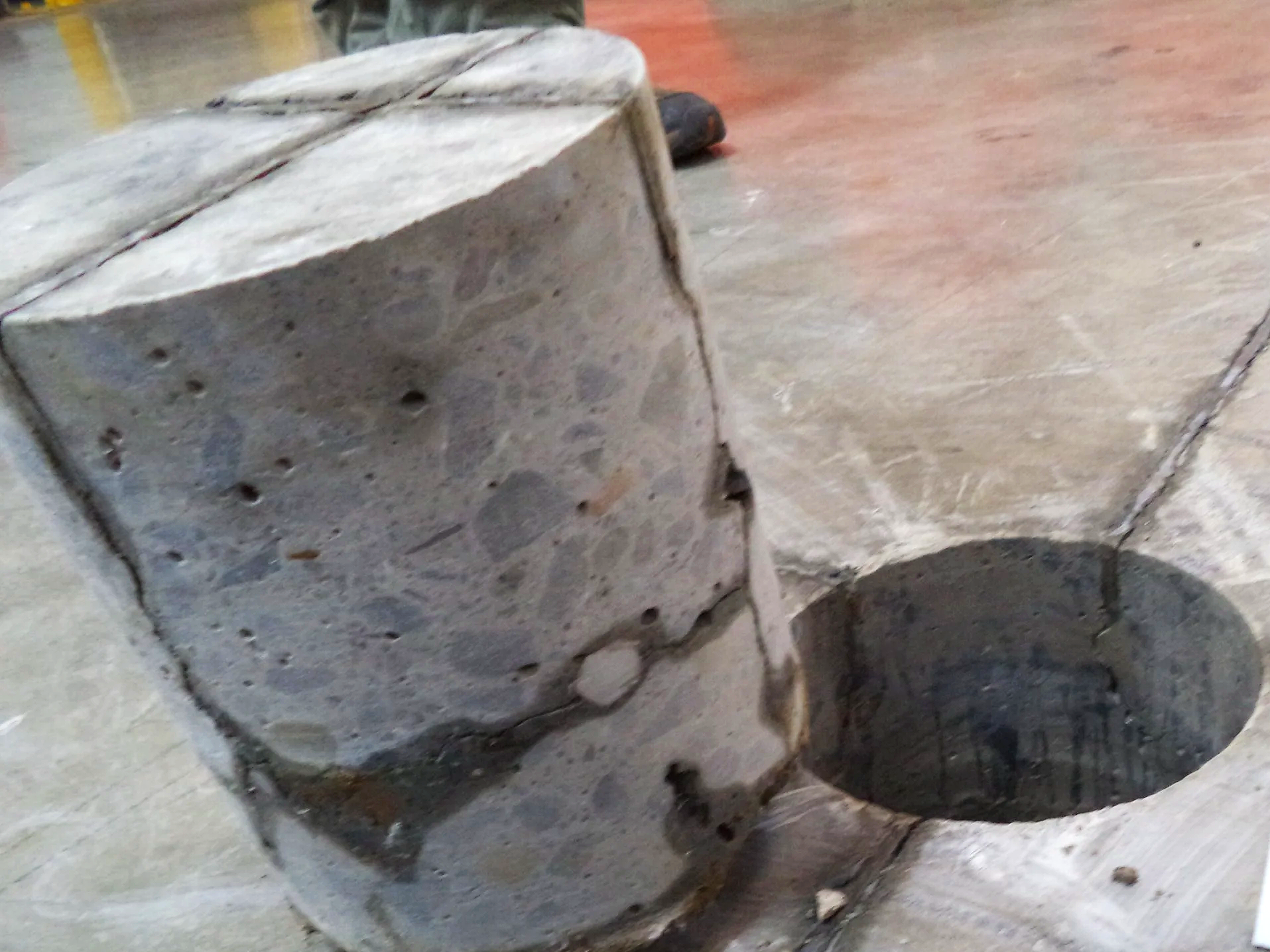
3. Cracking pattern irregular and discontinuous
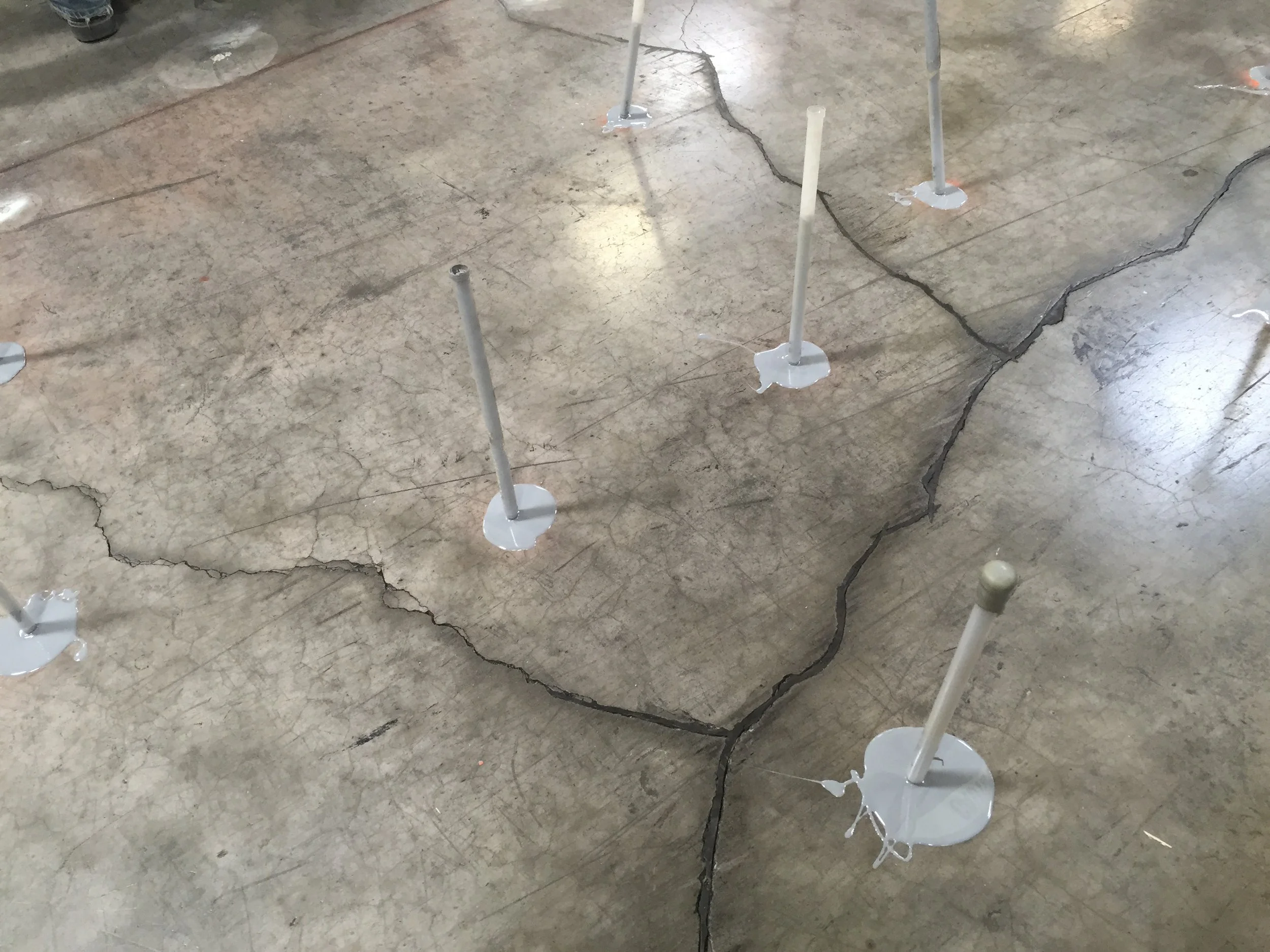
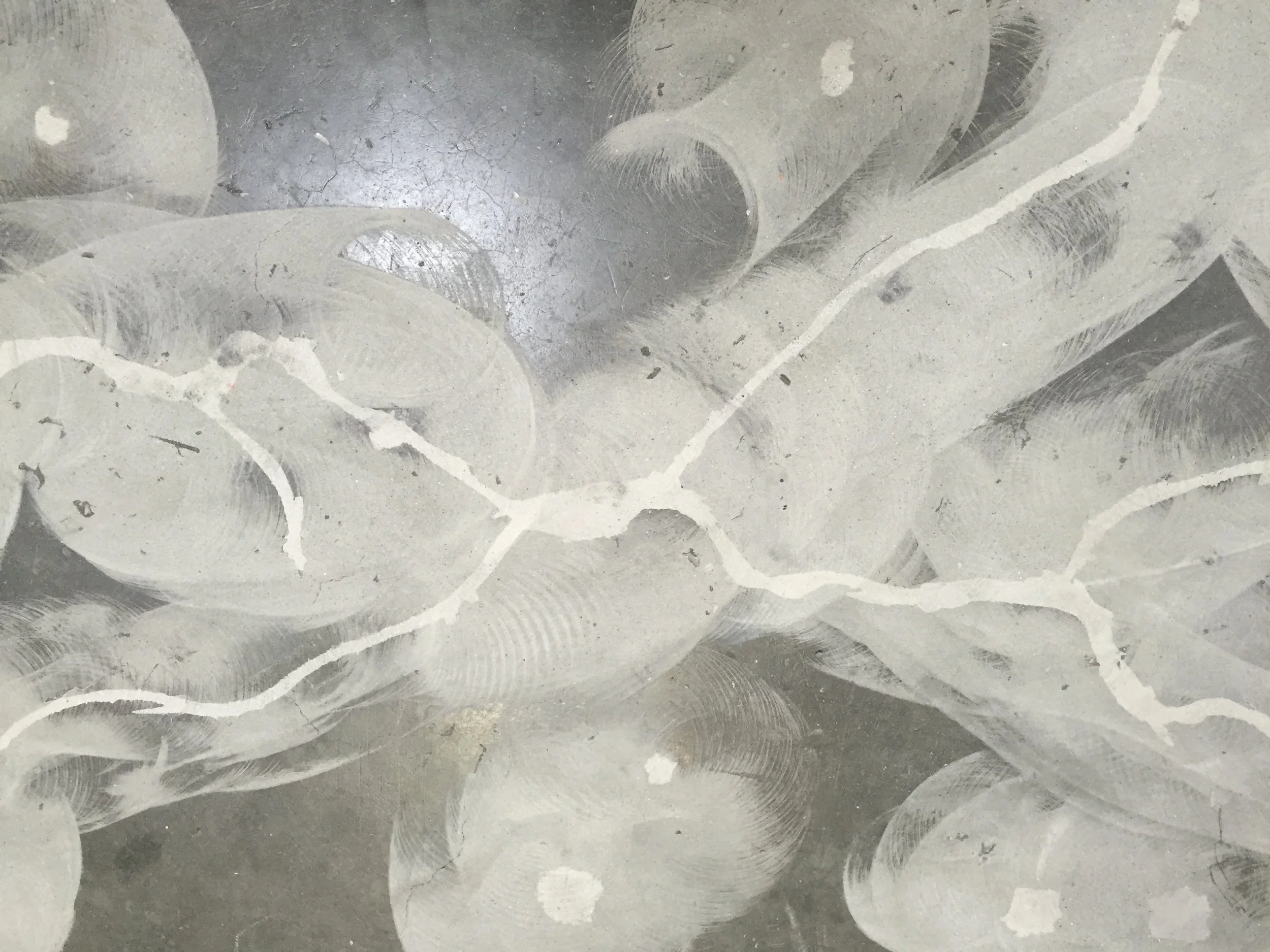
Cracks meandered across panels and intersected at many locations with local spalling, consistent with movement at joints, cracks, and variable support.
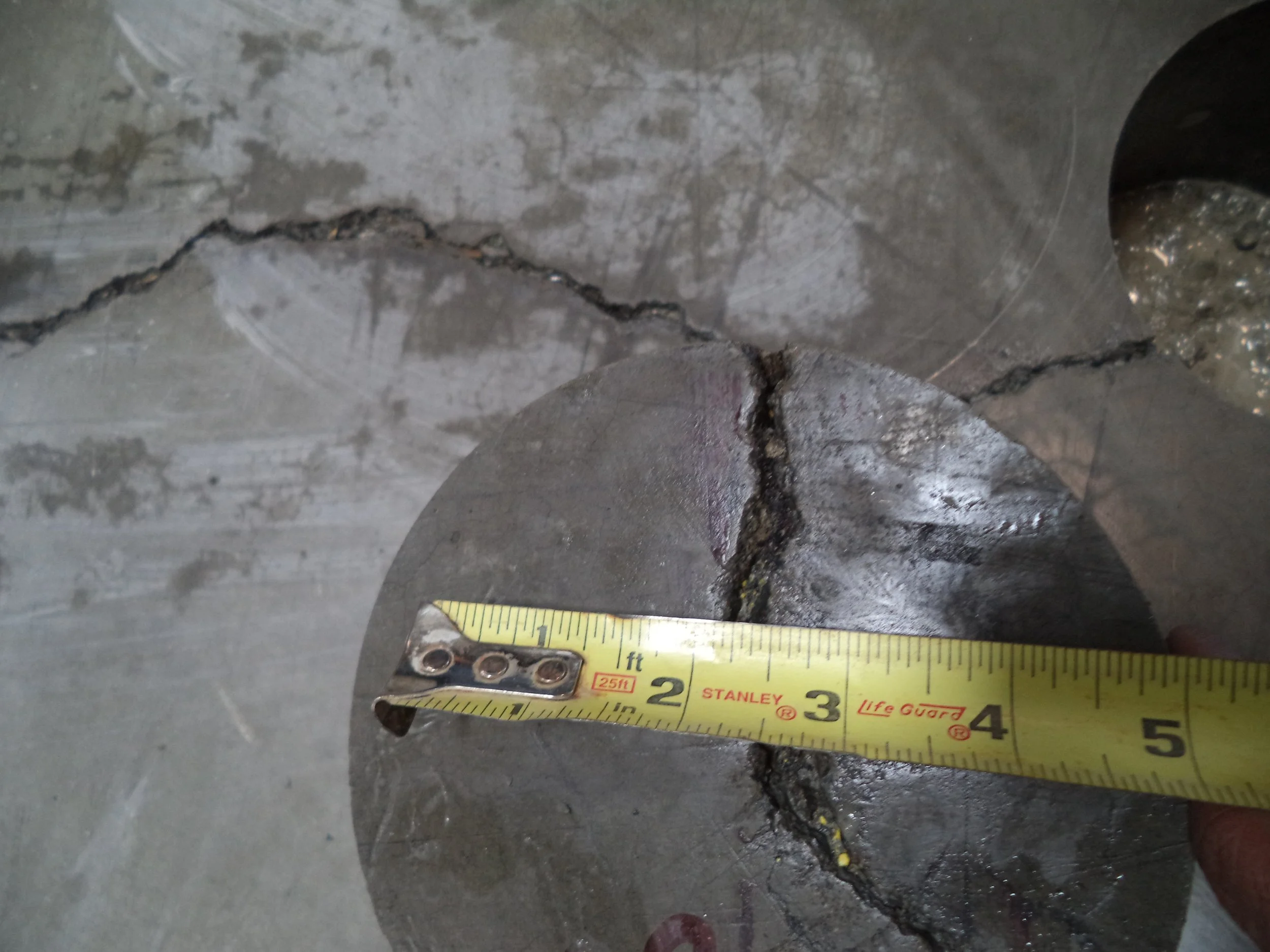
4. Joint sealant at end of service life and joint edges worn
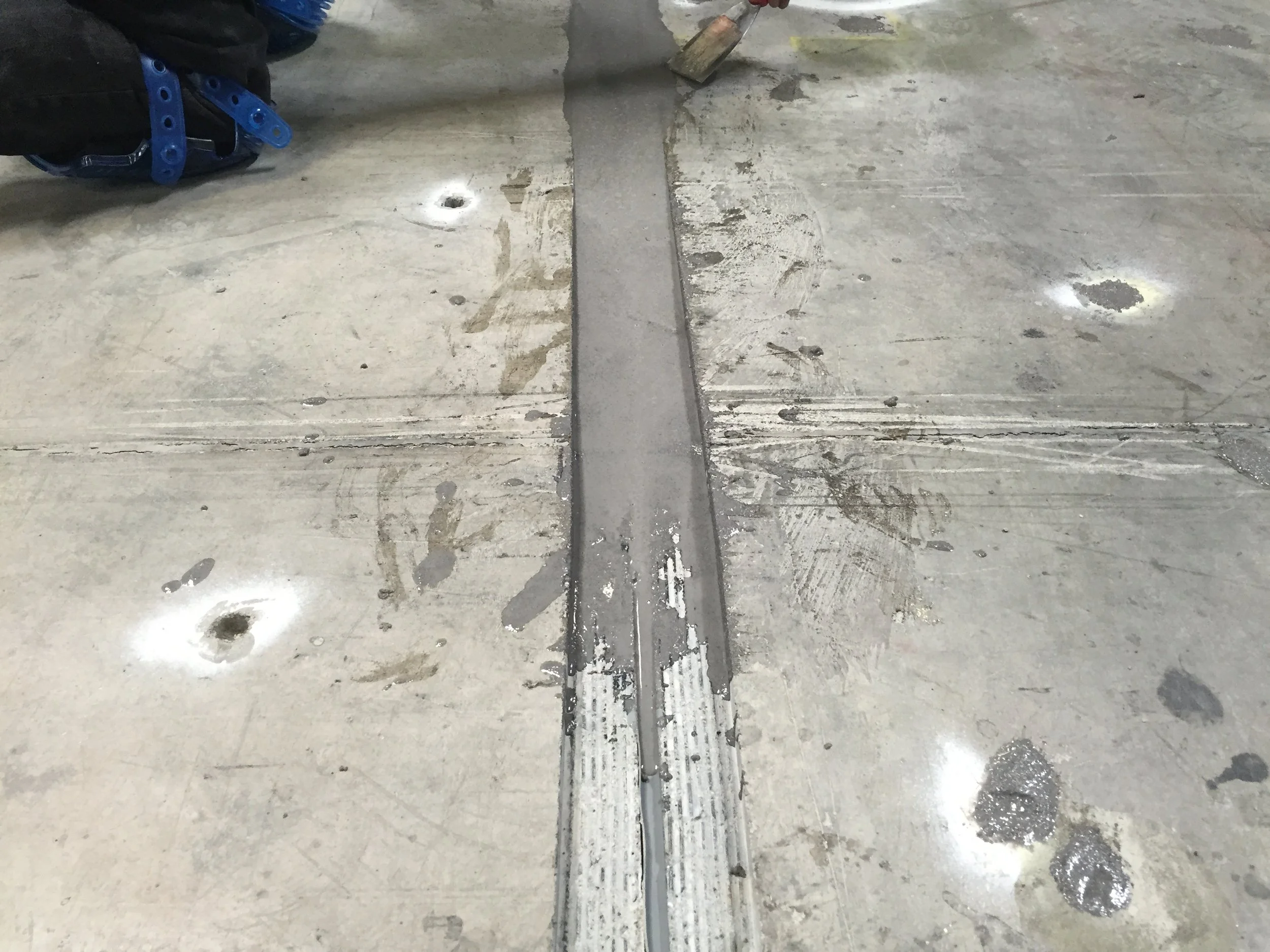
Several joints exhibited failed or missing sealant and minor edge wear, requiring removal and replacement as part of the repair program.
5. Less than uniform support at select locations
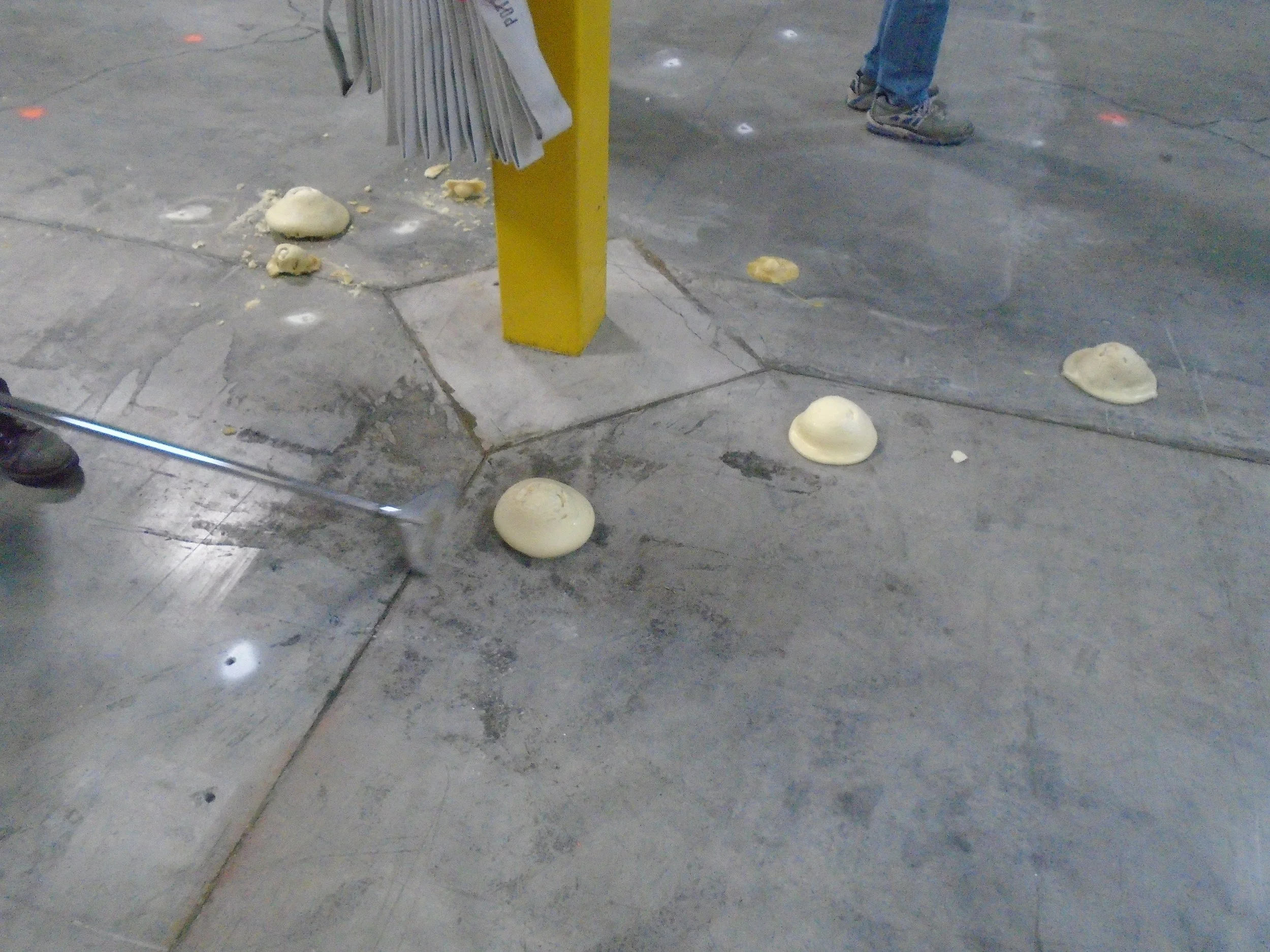
Observations at core holes suggested areas where subgrade contact was not uniform, which needed targeted structural foam injection.
RECOMMENDATIONS & SOLUTIONS
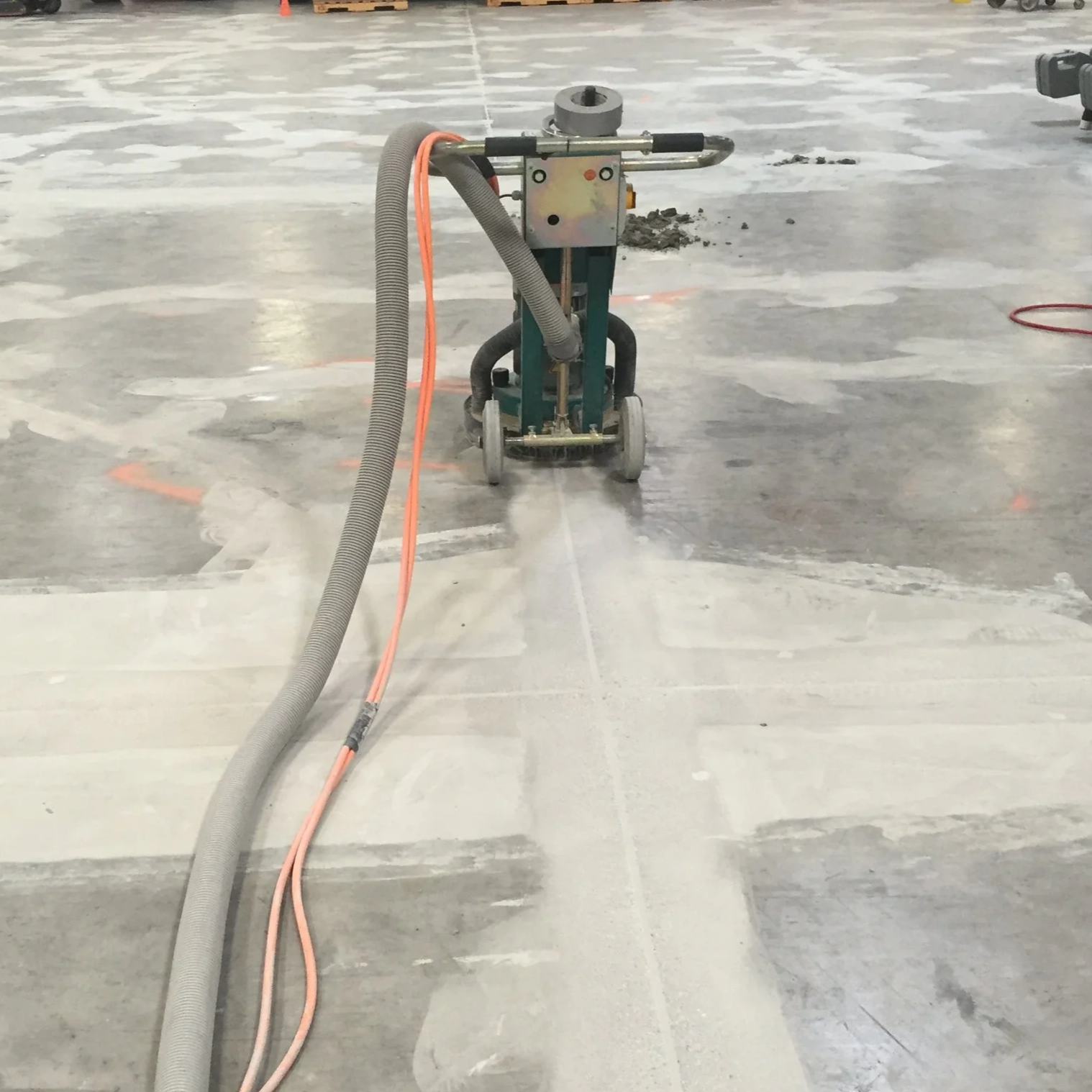
Structural foam injection to reestablish uniform support beneath the slab at selected locations.
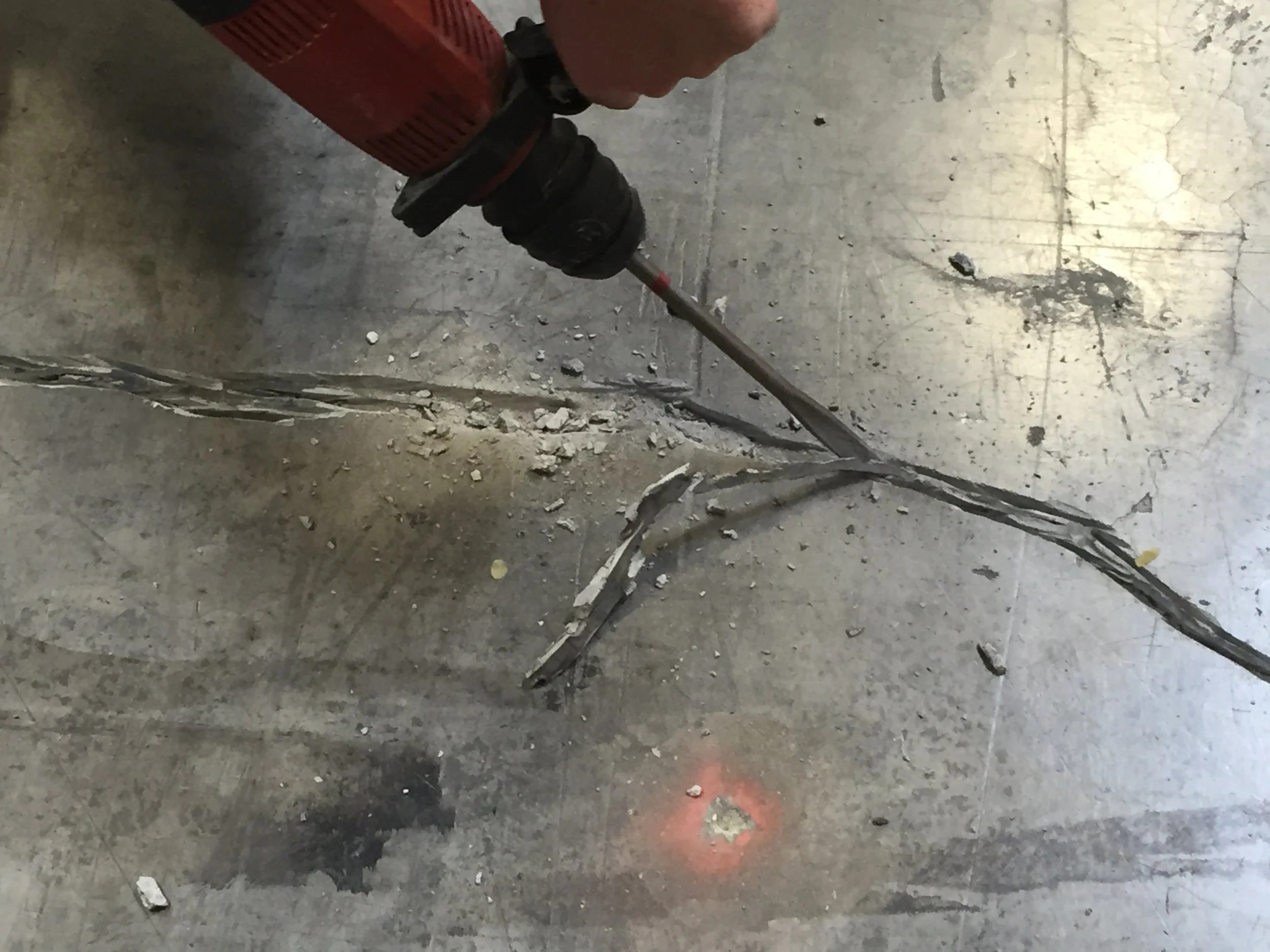
Cracks routed, cleaned, and epoxy-filled.
At joints, removed old sealant and replaced it with new joint sealant.
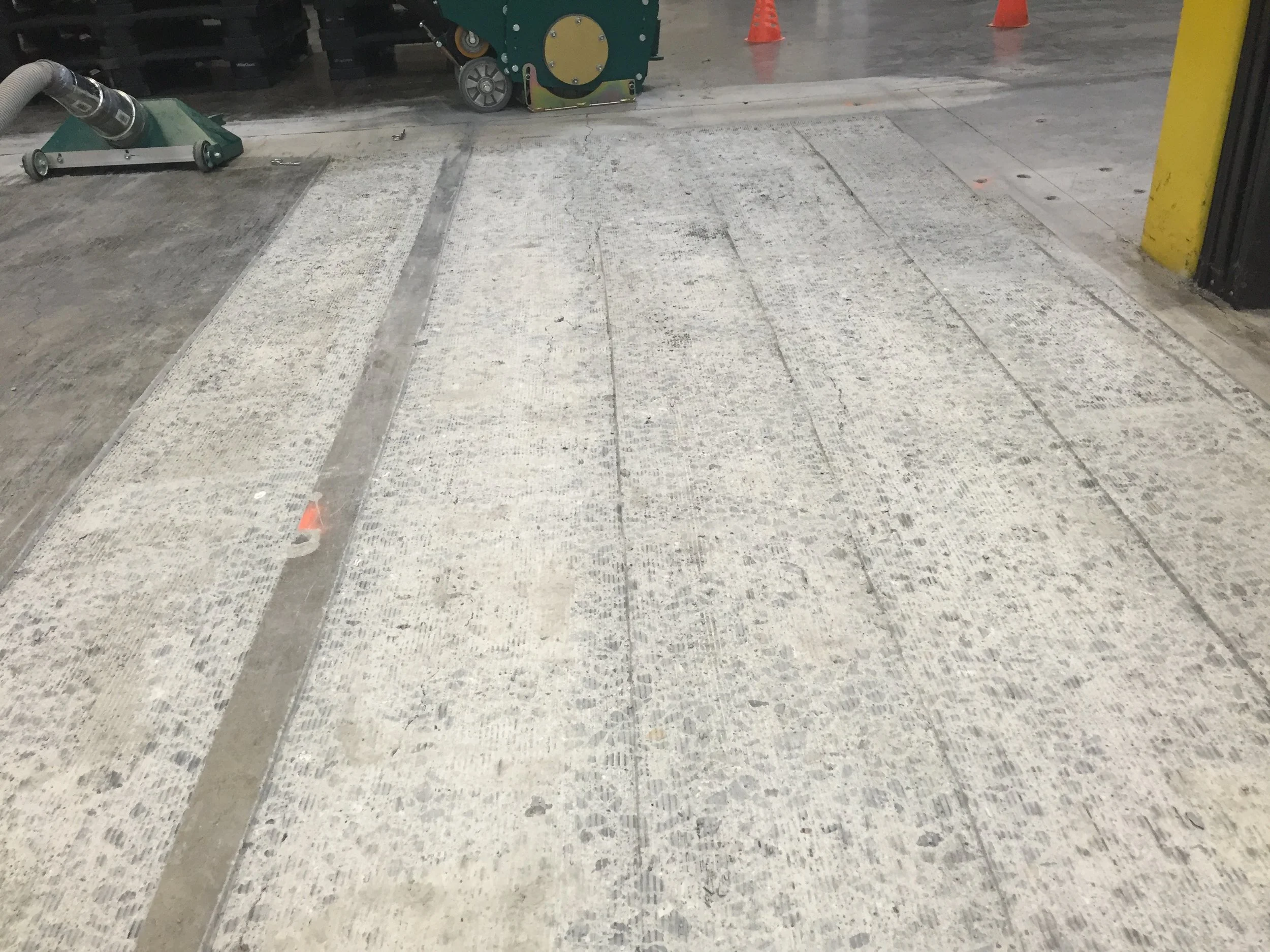
Grinded local high areas back to level.
Scarified and repaired surface defects as needed.
Grinded, buffed, and cleaned the slab surface.
Applied a penetrating sealer to the repaired areas.
THE OUTCOME
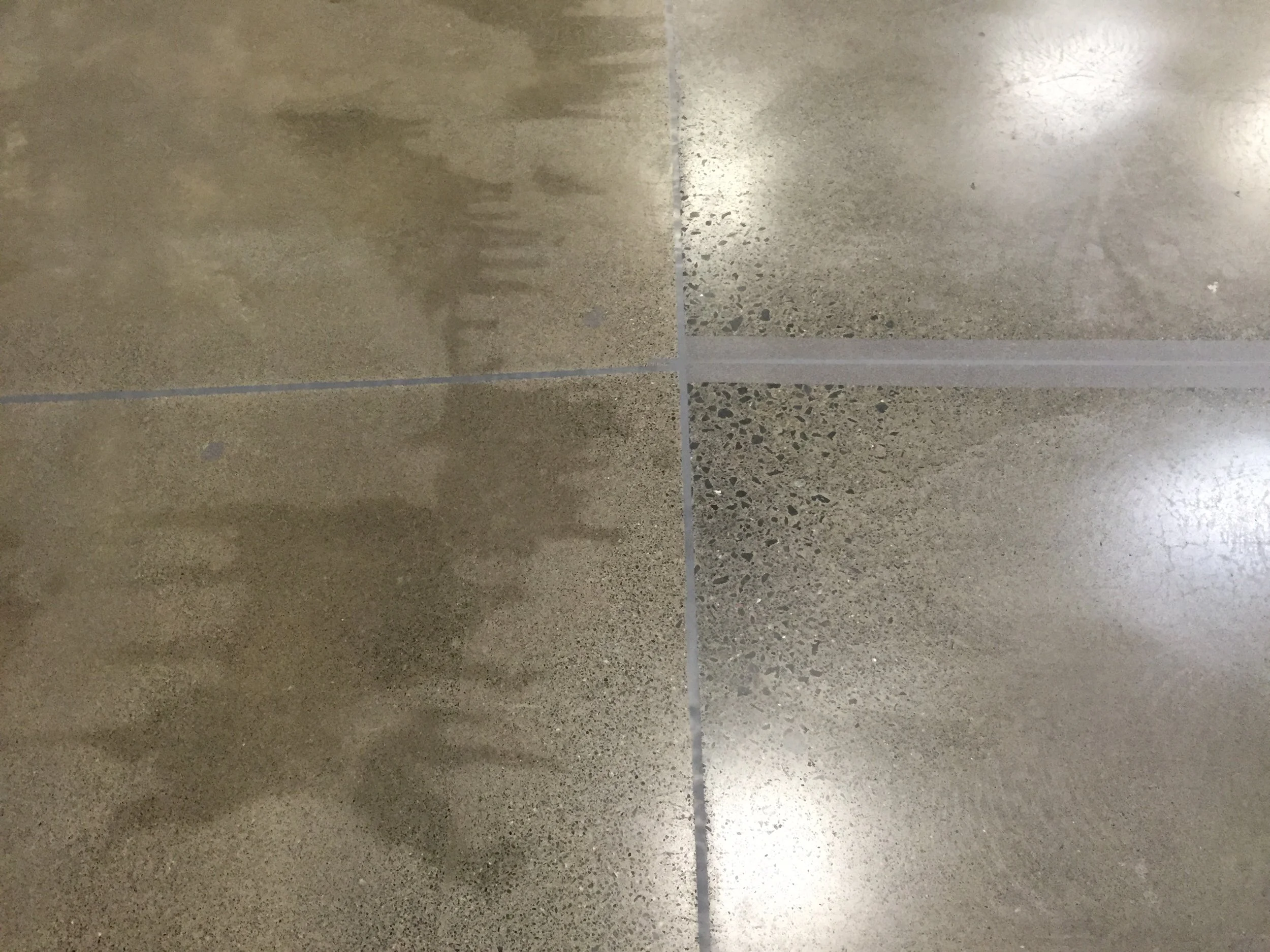
Targeted in-place slab repairs allowed the owner to avoid an expensive full replacement while keeping the industrial warehouse operational with minimal disruption. Work was phased so traffic aisles reopened as areas were completed, restoring a level, sealed surface for forklift traffic and material handling. By grinding to level, renewing joint sealant, and repairing mapped cracks, the floor was better protected against further cracking and moisture intrusion, and aligning performance with the warehouse’s daily demands.