

Levi Stadium - Epoxy Grout Under Bearing Plate
March 2014
Santa Clara, CA
Overview
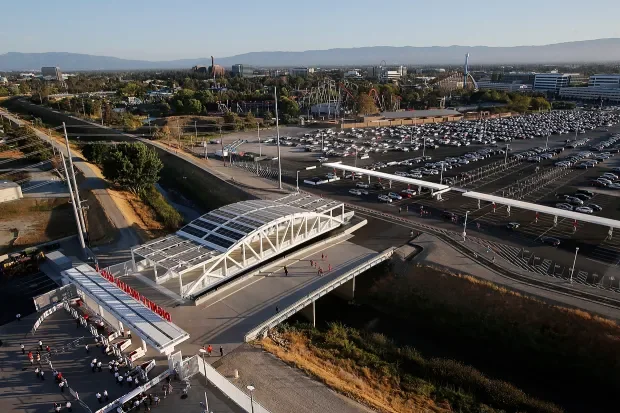
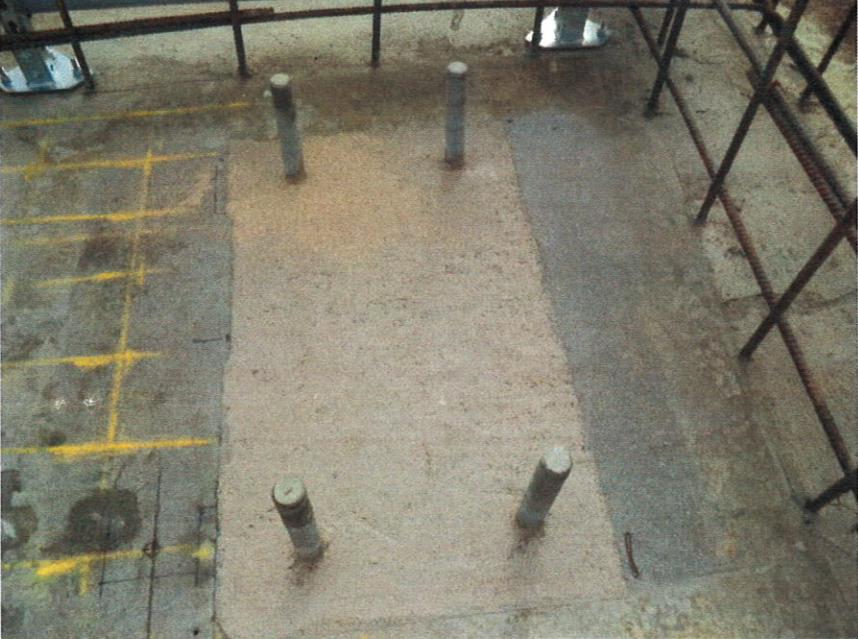
Ahead of the 2014 opening of Levi's Stadium in Santa Clara, California, a significant structural issue was discovered on three pedestrian bridges. The cementitious grout pads supporting 14 steel bearing plates were cracking and delaminating from the concrete abutments, compromising the intended load path.
An engineered repair replaced the failed grout with a high-strength epoxy system and thicker steel bearing plates. Concrete Science, Inc. provided special inspection, grout volume checks, and non-destructive testing to confirm that the remedial work restored the bearing assemblies to their design performance.
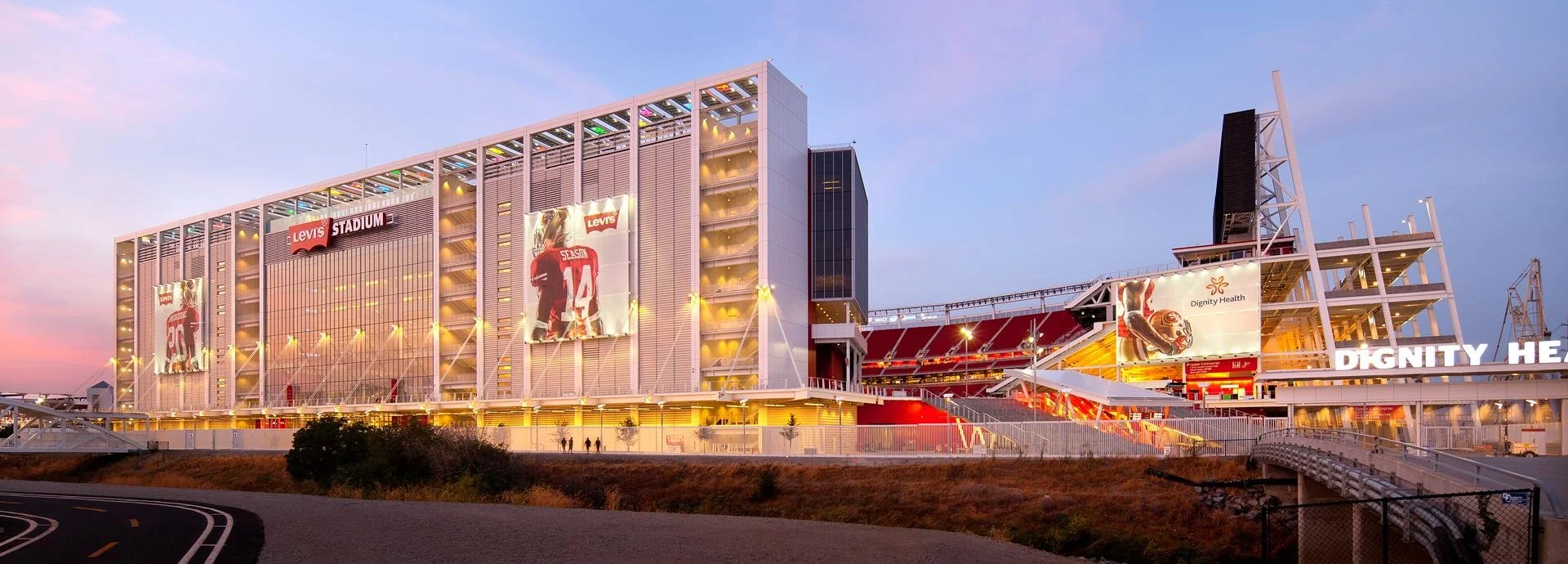
Image: Construction Specialties
SCOPE OF WORK
-
Documented cracking and delamination of the original 1.5 inch cementitious grout under 14 bearing plates on the North, Center, and South pedestrian bridges and adopted the engineer of record's epoxy grout and steel plate repair.
-
Removed all cementitious grout and installed 1.25 inch steel bearing plates over a maximum 0.25 inch layer of pressure injected Sikadur 35 epoxy, using Sikadur 31 Hi Mod Gel as the perimeter seal and Sikadur 32 for localized concrete repairs.
-
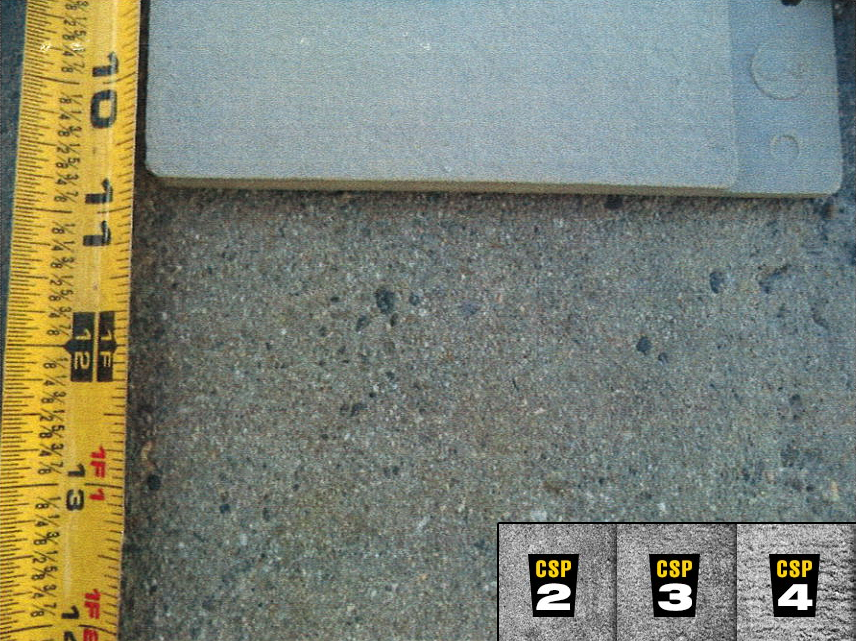
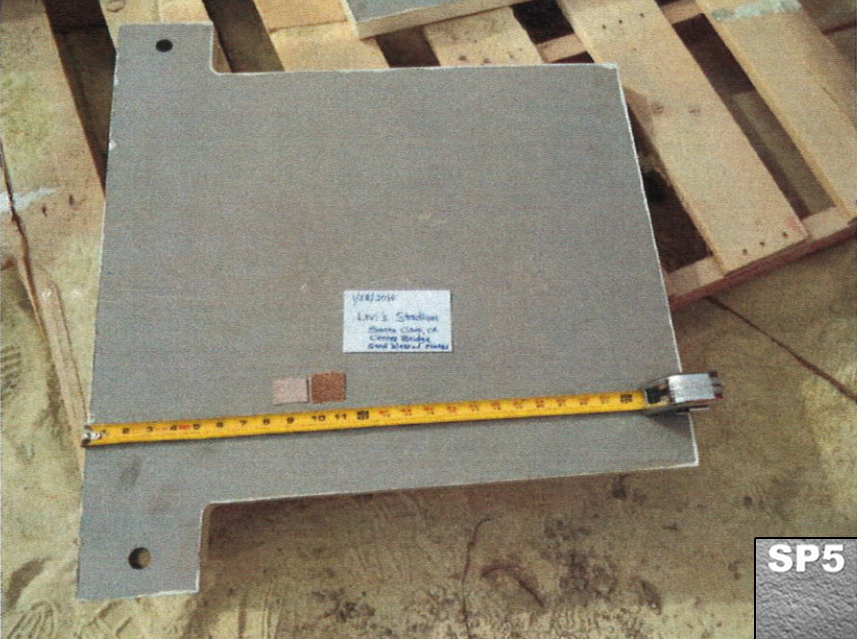
Confirmed concrete CSP 3 and steel SSPC SP5 surfaces, measured bearing gaps, sealed perimeters, and monitored pressure injection of epoxy to refusal at each plate.
-
Performed continuous special inspection, photo documentation, and field sampling of epoxy for ASTM D 695 compressive strength tests while logging product, batch, volume, and ambient condition data.
-
Ran impulse response testing on four Center Bridge plates and compared theoretical grout volumes to injected volumes to verify complete support and fill beneath the plates.
KEY FINDINGS
1. Epoxy strength exceeded specification
Field-cured Sikadur 35 samples at nearly all locations exceeded the 7,500 psi requirement, with most 3-day strengths in the 8,000 to 11,000 psi range. One plate with a low 3-day value of 6,670 psi exceeded 10,500 psi at 4 days, confirming adequate strength. Sikadur-32 repair mortar reached approximately 8,860 psi.
2. Grout volumes indicated full bearing
Where data were available, injected epoxy volumes were greater than calculated theoretical gap volumes, for example, 0.57 to 0.65 gallons theoretical versus about 1.0 to 1.1 gallons injected. This indicated that the gaps beneath the steel plates were completely filled.
3. NDT confirmed uniform support
Impulse response testing at 15 points per plate on four Center Bridge bearings showed only minor stiffness variations consistent with shim locations and no patterns associated with significant voids or delamination.
4. Field conditions managed successfully
Specified blast profiles were verified before injection, and during rainy conditions, the work areas were protected to keep prepared surfaces and epoxy dry. Continuous inspection confirmed that the mixing, injection sequence, and curing process adhered to the repair design and material specifications.
5. Field conditions managed successfully
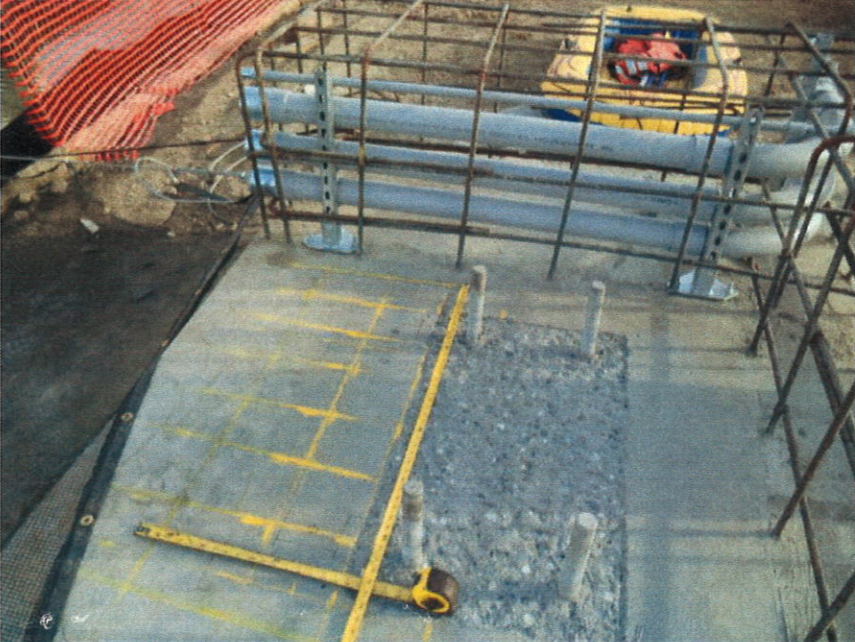
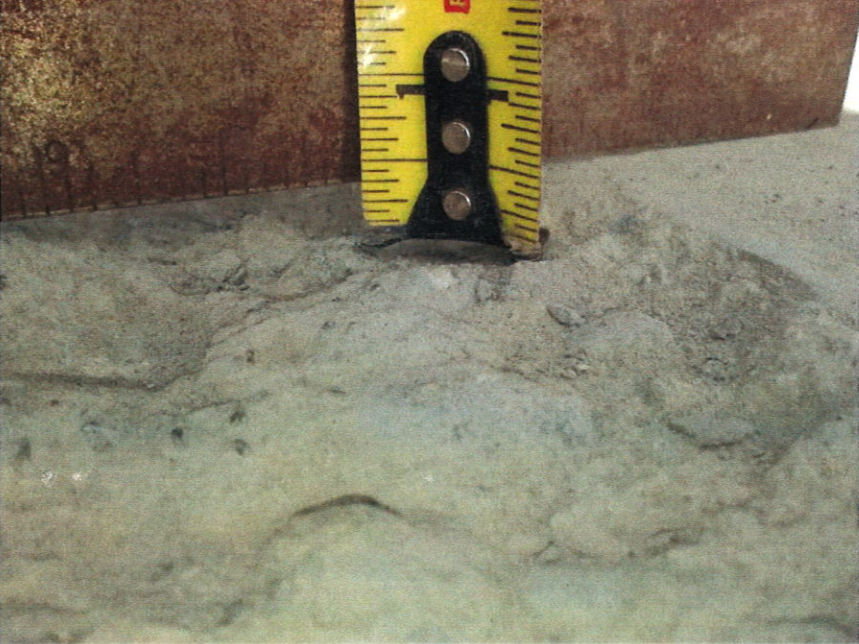
Concrete bearing surfaces were prepared to the ICRI CSP-3 profile (image below) and steel bearing plate undersides to NACE SSPC-SP5 (image below), using a controlled three-step process of verifying gaps, sealing the perimeter with epoxy gel, and pressure-injecting low-viscosity epoxy to refusal.
THE OUTCOME
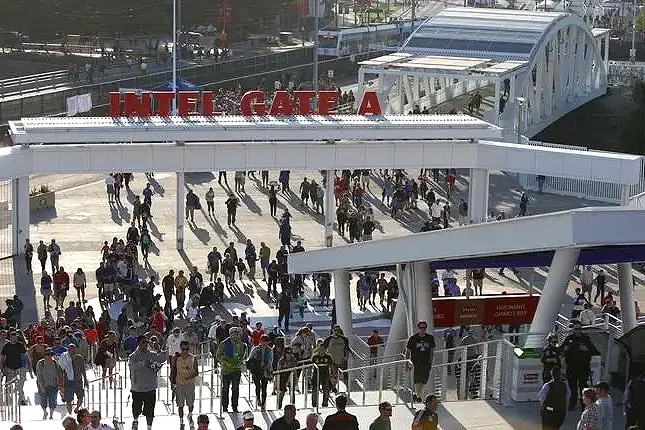
All 14 bearing plates on the Levi's Stadium pedestrian bridges were rebuilt using the steel plate and pressure-injected epoxy grout system, and testing confirmed that the epoxy achieved the specified strength, fully filled the gaps, and provided uniform support with no significant voids. With continuous special inspections and documentation verifying that surface preparation, injection, and curing adhered to the repair design and material specifications, the remedial work restored the bearing plate assemblies to their intended structural performance and prepared the pedestrian bridges for safe, long-term use by thousands of 49er Faithful fans.