Corrosion - Balcony Decks at a Multi-Unit Residential Tower
March 2010
San Francisco, CA
Overview
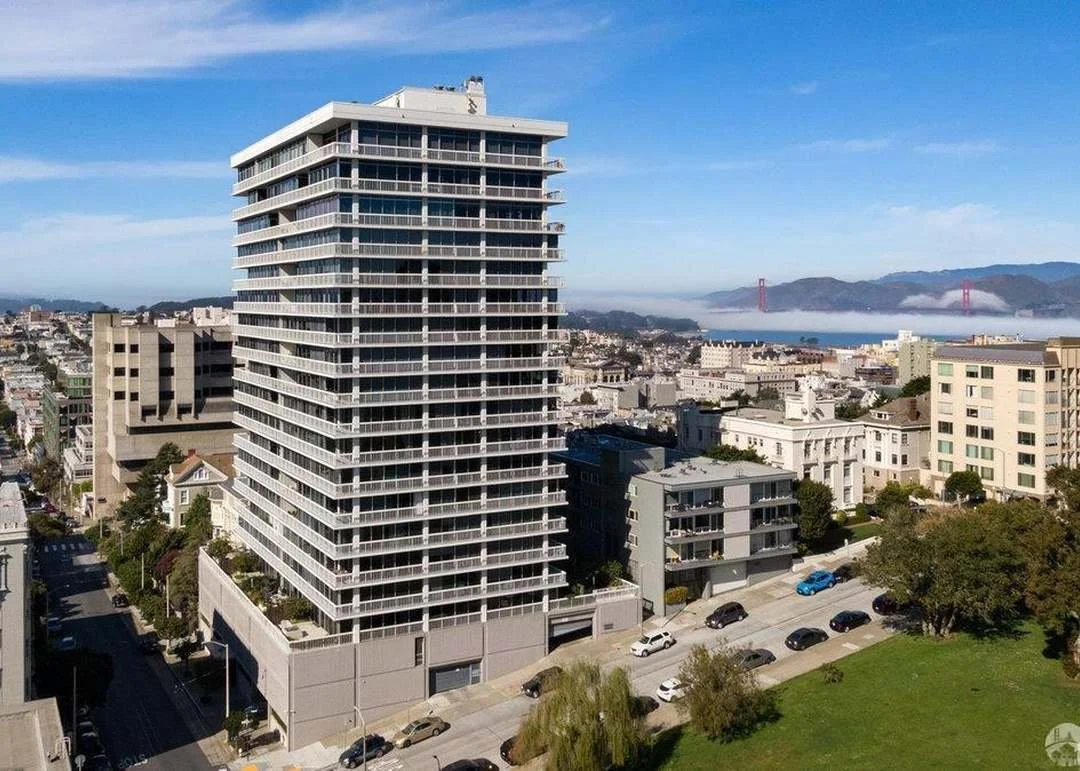
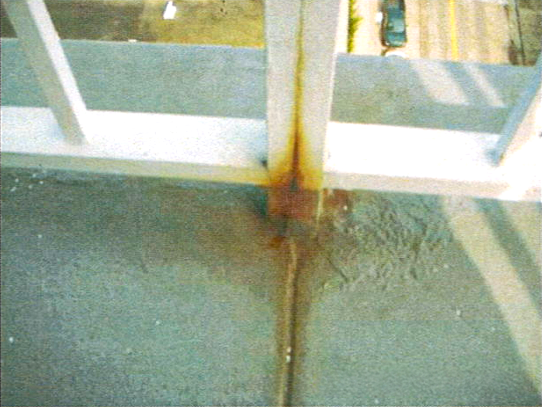
Persistent leaks and corrosion were reported across several balconies and adjacent ceilings in multiple units. Symptoms included water stains, paint bubbling, and delamination at soffits, and rust staining at railing posts. A recurring building-wide condition noted by our team was that balcony decks were painted rather than protected with a dedicated moisture-proofing system, and localized bubbling indicated paint separation from the concrete substrate.
As site walks progressed, the scope expanded to include additional units when new evidence emerged. Notably, maintenance staff observed trapped water draining from a small hole drilled in a concrete ceiling in one unit, and handwritten notes referenced a similar event years earlier. The pattern suggested active moisture pathways at posts and edges, along with possible ponding or entrapment within balcony and ceiling assemblies.
SCOPE OF WORK
-
Locate embedded reinforcing steel in selected balcony decks and ceilings.
Create small, targeted openings to observe steel condition.
-
Scrape and remove localized paint at balcony soffits.
Examine the concrete substrate for delamination, cracking, or staining.
-
Chip at select locations to expose rebar.
Document corrosion, scale, or section loss.
-
Where railing posts are set in grouted sleeves, access the sleeve grout for condition checks.
Include pH and chloride testing as indicated by observations.
-
Patch exploratory openings after documentation.
Paint the surface and restore finishes locally.
KEY FINDINGS
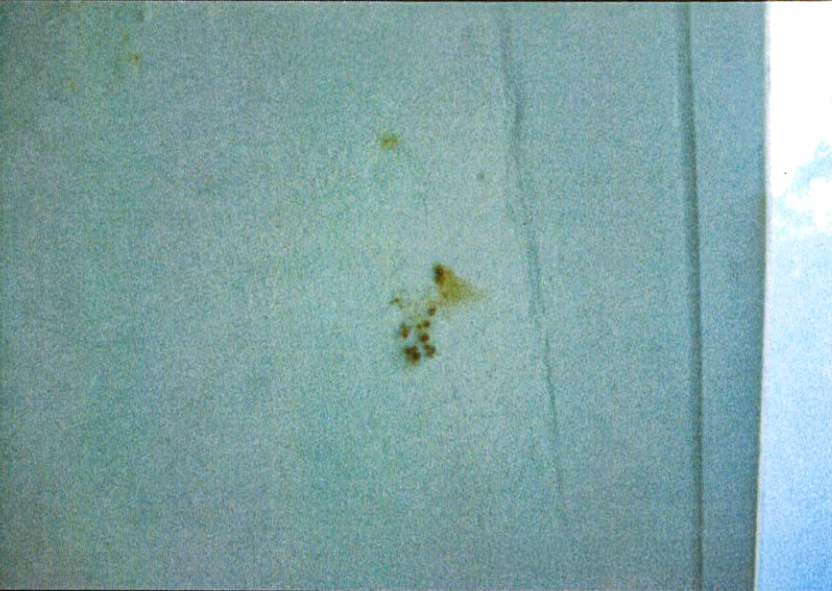
Multiple units showed similar corrosion evidence.
1. MOISTURE-RELATED distress was widespread
Water stains, ceiling rust marks, and paint bubbles or delamination were repeatedly documented at balcony soffits and ceilings.
2. Decks lacked a MOISTURE-PROOF coating
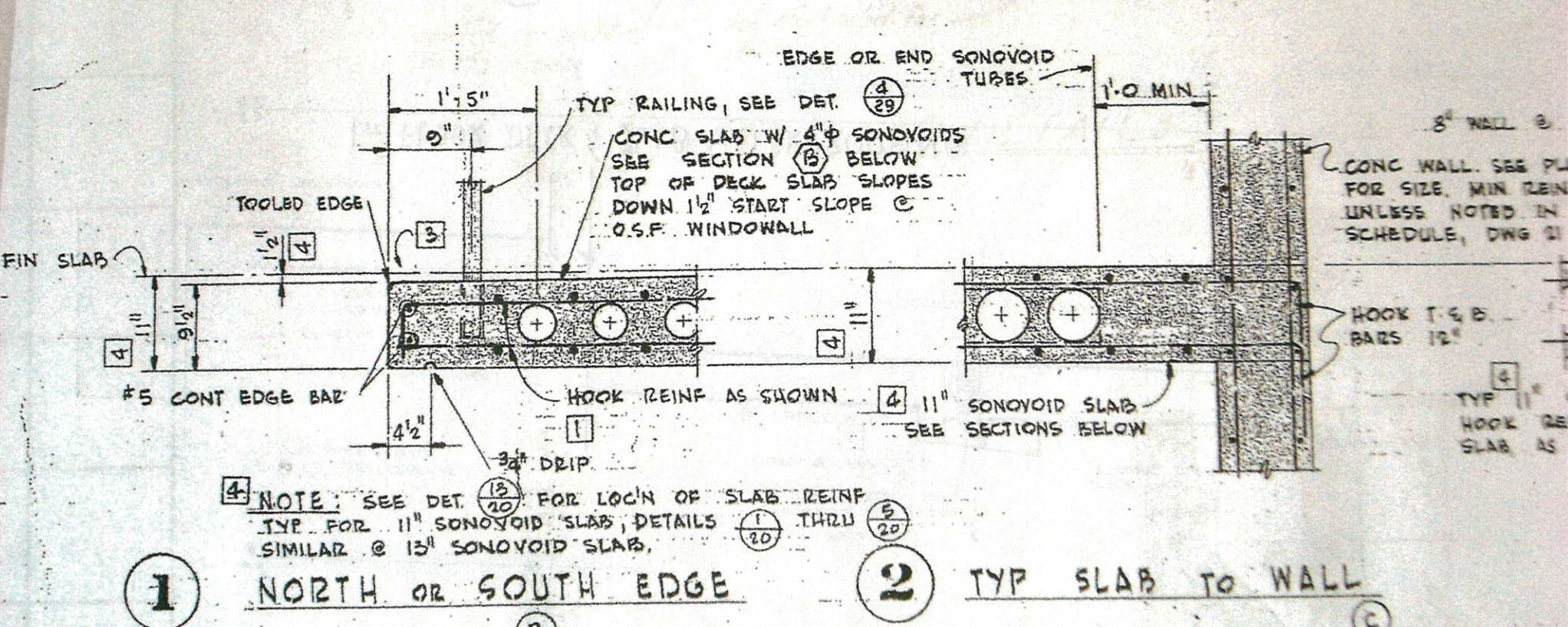
The balconies were painted rather than coated with a dedicated waterproofing system, and bubbling indicated paint separation from the concrete surface.
3. Evidence of trapped water
In at least one ceiling, water drained after a small hole was drilled. Notes indicate a similar occurrence previously, suggesting water entrapment within the assembly.
4. Evidence of trapped water
Severe corrosion was observed at posts embedded in grouted metal sleeves. Staining and suspected leakage at post penetrations were identified as likely entry points.
5. Rebar condition requires exposure
Mapping reinforcement alone cannot determine corrosion state. Direct observation through small openings is necessary to assess the condition of steel reinforcement.
RECOMMENDATIONS & SOLUTIONS
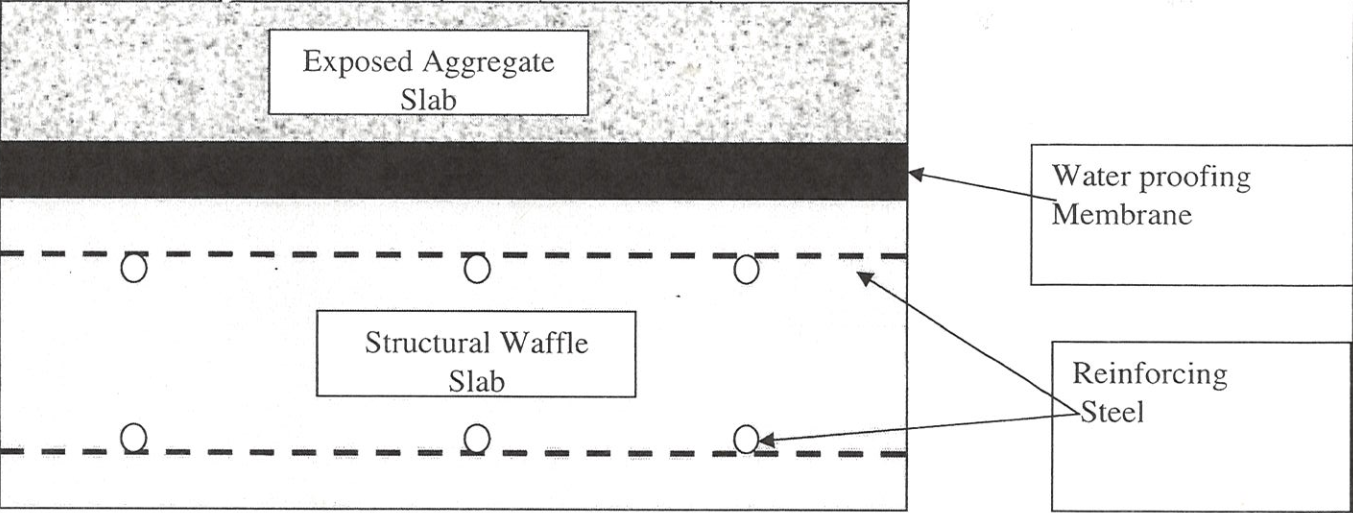
Execute the approved intrusive evaluation to confirm the condition of rebar in representative balconies and ceilings, and characterize grout in post sleeves, including pH and chloride as indicated by field conditions.
Document substrate condition beneath scraped paint at soffits to delineate any delamination limits for repair quantities.
Use the results to develop a comprehensive repair and protection plan that addresses water entry at post sleeves and edges, repairs damaged concrete, and upgrades balcony moisture protection to a suitable system.
Continue coordinated access planning so that confirmed sources and extents can be addressed efficiently without duplicate openings.
THE OUTCOME
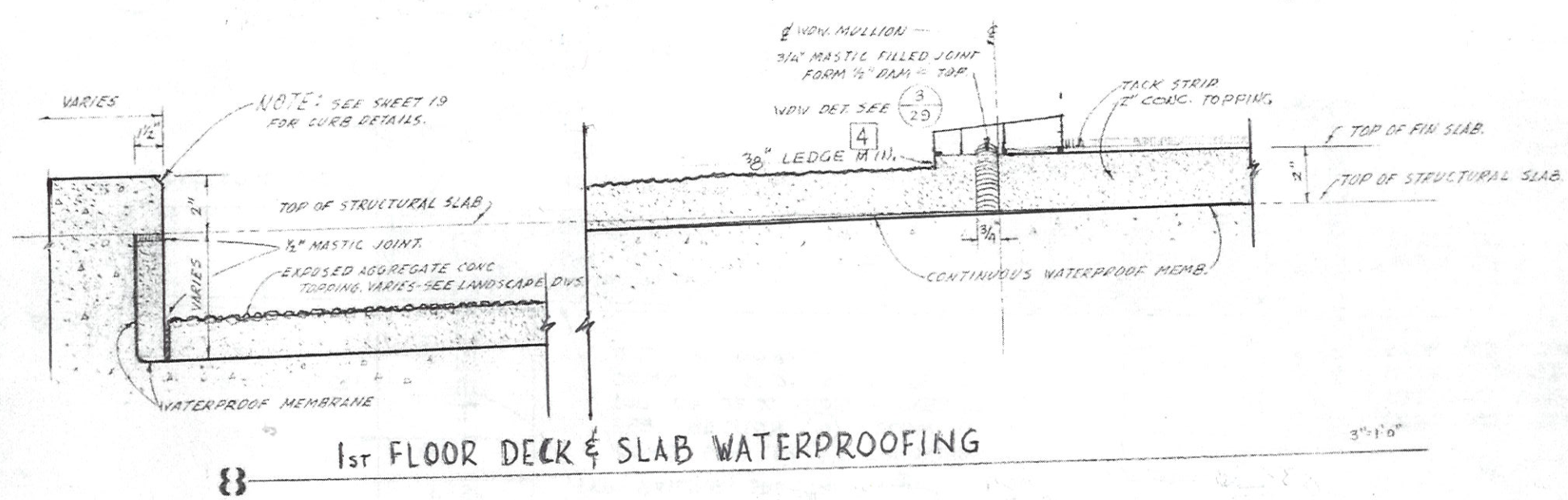
A refined and targeted investigation plan was approved to verify steel and substrate conditions across five representative units. Exploratory work and patch back were authorized so findings can drive a focused repair design and a building wide moisture protection strategy.